The Art of True Vanilla Understanding the Craft Behind Nature's Most Misunderstood Flavor
- Marina C. Pallatt
- Mar 29
- 3 min read
Vanilla is often taken for granted as a simple flavoring, yet the reality behind true vanilla is far more complex and fascinating. At the Hawaiian Vanilla Company, I discovered that vanilla is not just a taste but a living craft that demands patience, precision, and respect for nature. Most vanilla flavoring worldwide is synthetic, engineered to mimic the natural product, but real vanilla comes from a delicate process that spans continents and centuries.
Walking through the vanilla vines in Paʻauilo, Hawaii, I saw firsthand the care involved in growing vanilla. Each vine requires hand-pollination, and the beans must be cured slowly over months. This process cannot be rushed. True vanilla is a product of climate, human touch, and time. Its story connects places like Mexico, Micronesia, Haiti, and even research labs in New Jersey, all working to understand and cultivate this misunderstood ingredient.
The Journey of Vanilla from Orchid to Bean
Vanilla starts as an orchid flower, which blooms for only a short time each year. The flower’s natural pollinators are rare, so farmers must hand-pollinate each blossom carefully. This delicate task requires skill and timing because the flower wilts quickly if not pollinated.
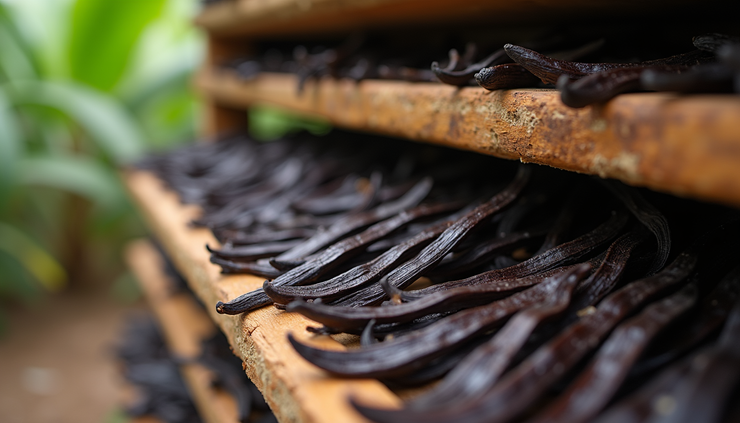
After pollination, the vanilla bean grows over several months. Once harvested, the beans undergo a curing process that can last up to six months. This involves sweating, drying, and conditioning the beans to develop their signature aroma and flavor. The curing transforms the green pods into the familiar dark brown beans filled with tiny seeds.

This slow, hands-on process contrasts sharply with the mass production of synthetic vanilla, which is made in labs to imitate the flavor without the time or care. Real vanilla’s complexity comes from nature’s slow work and human dedication.
Vanilla’s Global Roots and Cultural Significance
True vanilla’s origins trace back to Mexico, where the Totonac people first cultivated the vanilla orchid. The plant later spread to other tropical regions, including the rainforests of Micronesia and the islands of the Caribbean. Each region adds its own story and techniques to vanilla cultivation.
In Haiti, vanilla farming supports many small communities. Despite challenges like climate and economic hardship, farmers maintain traditional methods that preserve vanilla’s quality. Their resilience keeps the craft alive and connects vanilla to cultural identity and livelihoods.
Research institutions like Rutgers University study vanilla to improve cultivation and understand its genetics. This scientific work supports farmers by developing better growing techniques and disease resistance, ensuring vanilla’s future.
What Vanilla Demands from Growers and Consumers
Vanilla requires more than just planting and harvesting. It demands attention, patience, and presence. Each step, from hand-pollination to curing, must be done carefully. Rushing any part reduces quality and flavor.
For consumers, this means appreciating vanilla beyond its use as a simple flavoring. True vanilla is a product of time and care, and its price reflects that. When you choose real vanilla, you support the farmers and traditions behind it.
Here are some practical tips to recognize and enjoy true vanilla:
Look for vanilla beans with a rich, dark color and oily surface.
Avoid products that list “vanillin” or “artificial flavor” as the main ingredient.
Use whole beans or pure vanilla extract for the best flavor.
Store vanilla beans in a cool, dark place to preserve their aroma.
The Hawaiian Vanilla Company Experience
Visiting the Hawaiian Vanilla Company gave me a new appreciation for vanilla’s complexity. The farm in Paʻauilo is a place where nature and human effort meet. Walking among the vines, I saw how every detail matters—from the timing of pollination to the curing rooms where beans slowly develop their flavor.
The company’s commitment to quality and tradition shows that vanilla is more than a commodity. It is a craft that connects people to the land and to each other. Their work reminds me that some of the most familiar flavors deserve our full attention and respect.

Vanilla’s story is a reminder that nature’s gifts often require patience and care. When we slow down to appreciate the process, we gain a deeper connection to the food we enjoy.


Comments